Ceramic kiln controller
Date: 2021, code updated 2024
Overview
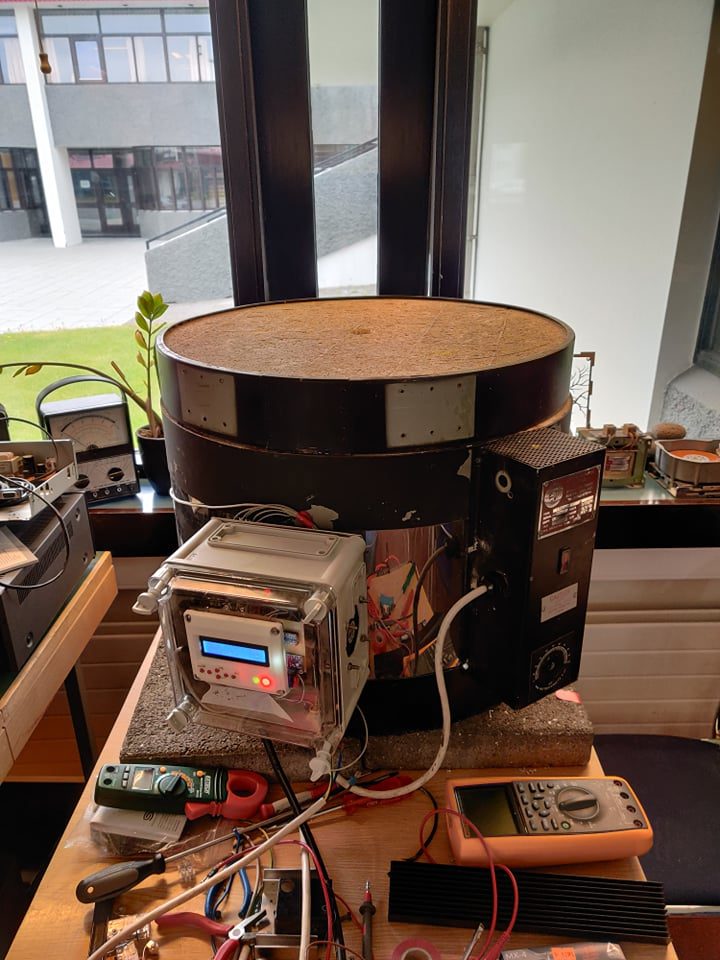
We got an old ceramic kiln cheap because its controller was broken. This project is the new controller we built for it: an Arduino, a thermocouple, a solid state relay and a small display, all in one box next to the kiln.
Mains voltage
The controller switches the kiln's 230 V heating elements. Only work on the wiring with the power disconnected, and have the build checked by someone qualified before using it.
Design
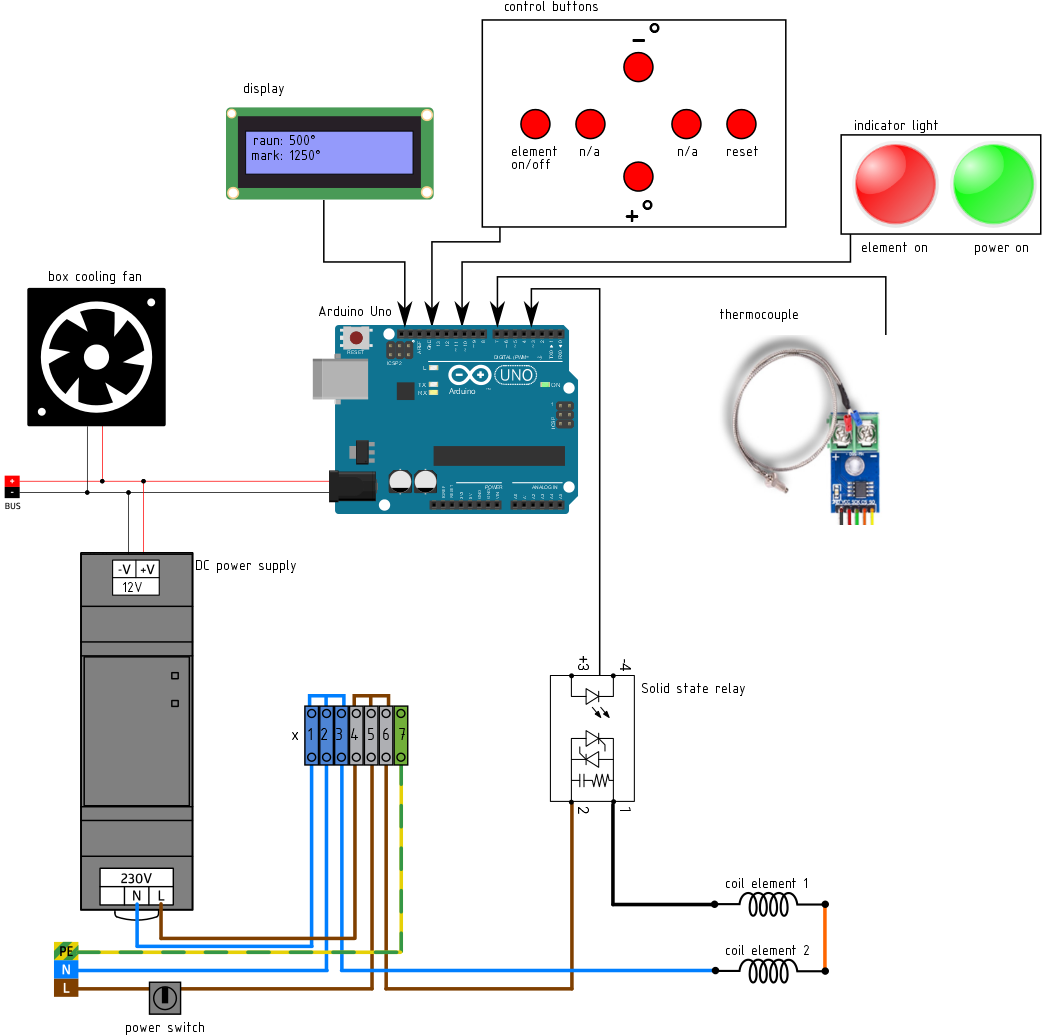
The wiring diagram shows how everything connects. The Arduino reads the temperature from the thermocouple and switches the heating elements through the solid state relay. A 12 V power supply runs the Arduino and a cooling fan for the box.
Materials and equipment
| Part | Notes |
|---|---|
| Arduino Uno | Runs the controller |
| Thermocouple with MAX31850 board | Reads the kiln temperature over 1-Wire |
| Solid state relay | Switches the heating elements |
| 16×2 LCD display | Shows target and actual temperature |
| Push buttons | Element on/off, temperature up and down, reset |
| Red and green LEDs | Red: element on. Green: power on |
| 12 V DC power supply | Powers the Arduino and the fan |
| Box cooling fan | Keeps the electronics cool |
| Power switch and terminal block | Mains side |
| Clear electrical enclosure | Holds everything |
The display frame and buttons are 3D printed. The STL files are in the original repository.
Control panel
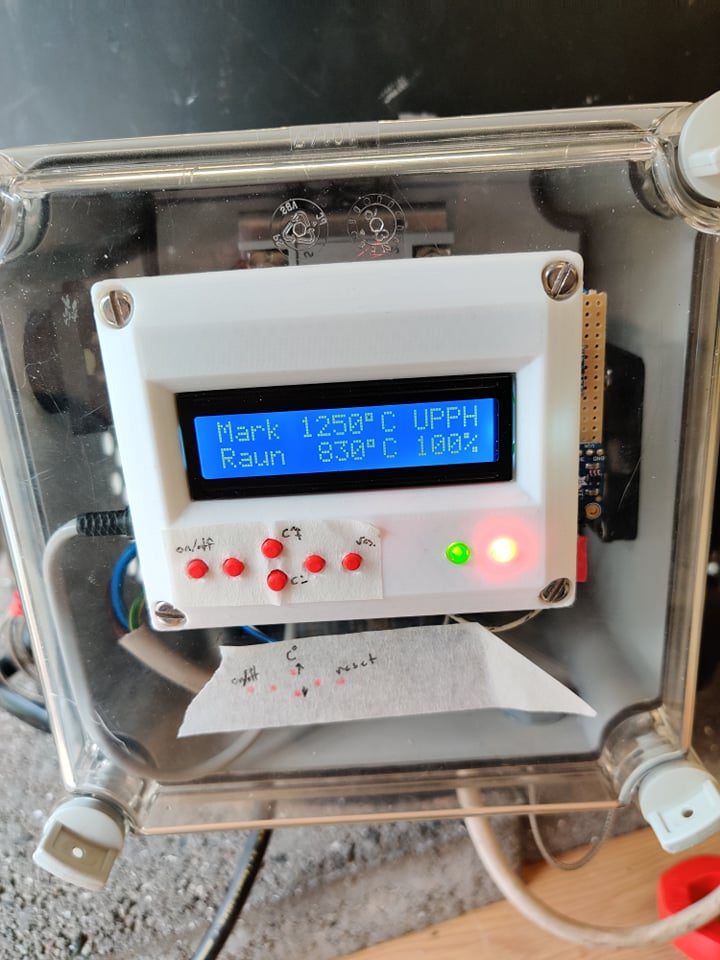
The display shows the target temperature on the top line and the actual temperature on the bottom line. The labels are in Icelandic: Mark is the target and Raun is the actual temperature.
Element support frame
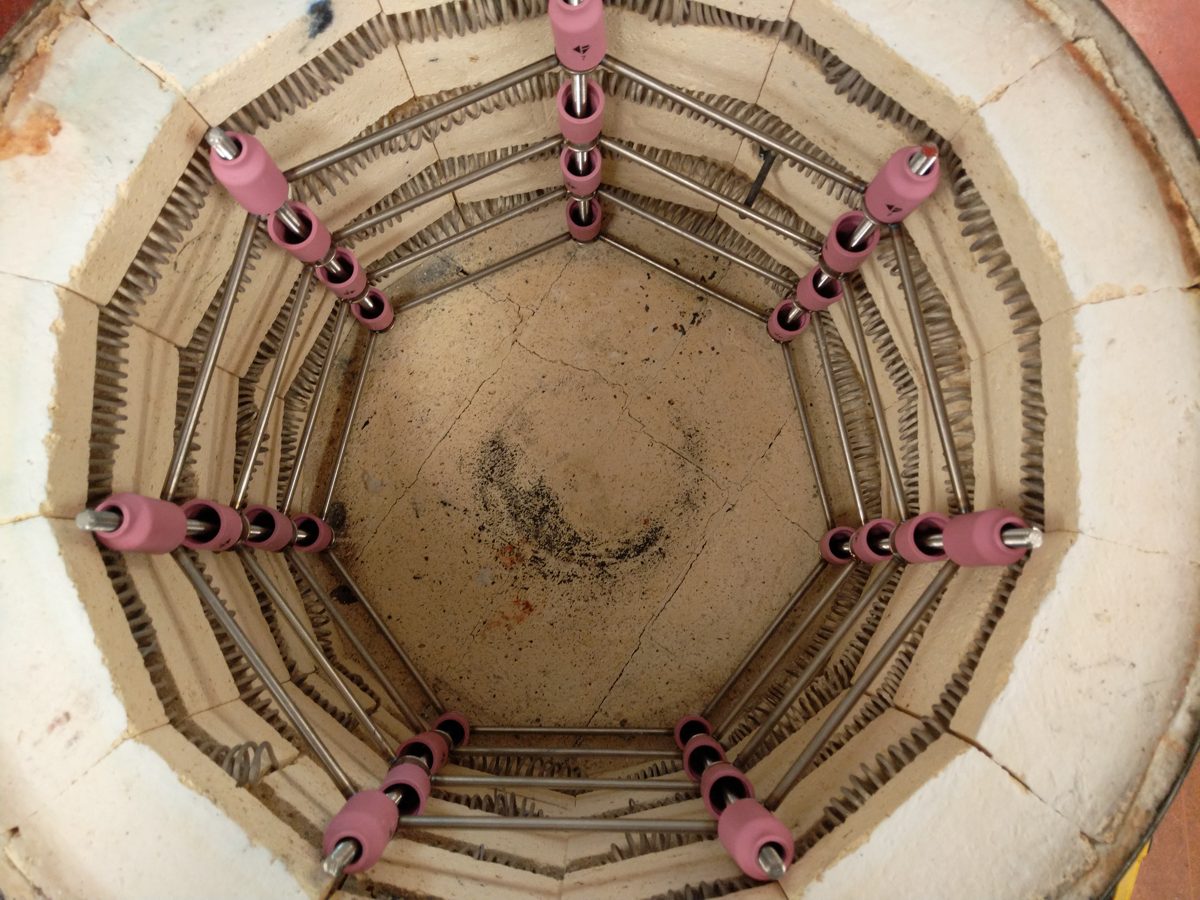
A support frame made from steel rods, with ceramic gas nozzles as spacers, keeps the heating elements in place.
Code
There are two versions of the code in the repository:
hitastyringv0.3.inocontrols the kiln to a target temperature set with the buttons, between 20 and 1250 °C.keramik_styring.ino(2024) runs a fixed firing schedule:- Ramp to 300 °C and hold for 4 hours
- Ramp to 600 °C and hold for 3 hours
- Ramp to the saved target temperature, then turn off
Both versions can use PID control or simple on/off control.
Files and resources
- Original repository: code, wiring diagram (SVG) and STL files